
Besides the mammals and the huge variety of birds to be seen on Assateague Island, the ground and waters are teeming with other types of life, too. I'm not even going to try to get into the insect realm deeply - let's just say there are probably thousands of kinds of insects that live in, around, and on the island, as well as the butterflies, who use it as a migratory stopping place - most specifically, the Monarch. There are ants, beetles, ticks, flies, spiders, wasps, bees, gnats and mosquitoes galore. Besides the trees, grasses, and shrubbery, there are flowers in multitudes.
Other inhabitants of the island are less conspicuous than the large mammals and sudden flights of flocking birds. Seven species of frogs and toads depend on fresh water ponds in the center of Assateague for breeding, and a variety of six snakes, none of them poisonous, are native inhabitants. The black rat snake can be found across the forests, dunes, and marshes preying on rodents, small birds, or toads. The eastern hognose snake - which is often mistaken for the copperhead - prefers beaches, dunes, and grassy areas; while the northern water snake prefers salt marshes and freshwater or brackish ponds.
Several factors are thought to account for the discrepancy in the species present on the island (6) and those on the mainland (19). Geographic isolation and the difficulty posed for most reptiles in crossing the salt waters of the bay are some obvious causes. It is suspected that humans have also played a role by intentionally introducing some species to the island (as in the Sika deer). Harsh conditions, as well as limited range size and habitat types, may also restrict the species that can successfully survive on Assateague.
Several species of reptiles possess morphological adaptations necessary to survive the varying and sometimes harsh conditions of barrier island life. Many of these animals, for instance, have tough skins that exclude salt and retain moisture. Still others exhibit behavioral adaptations that limit their exposure to severe temperature or salinity. The eastern box turtle, one of the island's terrestrial reptiles, has the ability to retreat completely within its shell and will burrow under vegetation to escape extreme weather.
Assateague also hosts five species of aquatic freshwater turtles and three species of sea turtles, including the Maryland State Reptile, the Northern Diamondback Terrapin. One of the island's most charismatic species, Diamondbacks are unusual in that they are one of the few species of turtle that prefer estuarine habitats. They reside in all of the waters surrounding the island, but are most common in the salt marshes that border the bay. These turtles are a common sight to visitors paddling through these areas during the warmer summer months. Snapping turtles also abound - a very large fellow was mistaken for an alligator in Eel Creek on Chincoteague a month ago. One frequently sees turtles sunning on downed tree branches or trunks that arise from drains, channels and marshes on Assateague - these include the Eastern mud turtle, the Eastern painted turtle, and the red-bellied turtle. Atlantic loggerhead sea turtles are again laying eggs on Assateague beaches, as are leatherback sea turtles.
Fowler's toads make a home on Assateague, as do the upland chorus frog, American bullfrog, the gray and green tree frogs, and the Southern leopard frog. The red-back salamander is also a native inhabitant. Though not common, lizards can occasionally be seen on Assateague Island. Northern fence lizards live in forested and shrub thickets on the island. They feed on small terrestrial invertebrates, ares are usually seen sunning themselves on rocks, tree stumps, and other exposed areas within reach of a close hiding spot.
Numerous invertebrates, such as fiddler crabs and mud snails play key roles in maintaining the health of the island's salt marshes. Even the seemingly barren beaches provide habitat for nocturnal ghost crabs.
Finally, the coastal waters that surround Assategaue Island teem with life. The sheltered, nutrient rich waters of the estuary formed by the island provide ideal breeding and spawning habitats for many aquatic species. Many of these water-dwelling creatures are commercially important to the local area - the blue crab, three types of clams, oysters, mussels and scallops. Shrimping is done off-shore. And four types of eel can be found in the waters, marshes and ponds of the island.
Each spring a variety of fish, including spot, Atlantic menhadin, and summer flounder migrate into the area to breed. Later, the juvenile fish provide an abundant food source for birds, marine mammals, and larger fish. One hundred and sixteen ray-finned types of fish have been identified in island waters. (A few days ago a tourist caught an oyster toadfish from a local dock and wanted to know if it was edible.) One can surf fish at specified areas on Assateague; or bring or rent a boat for your use. Charter fishing trips are available. Flounder, croaker, drum, sea bass, and striped bass can be caught in the channels and bays. Mahi-mahi, cobia, tuna and sharks are found off shore. There are many types of jellyfish in the area, as well as sharks and rays. The most common sharks are makos, tigers, hammer-heads, sand, and dusky.
Occasionally one of three tagged Great White sharks are in the area - Mary Ann is, at last sighting 16 feet long and weighs about 3,500 pounds; the two smaller ones are Yeti and Hilton. They have transponders and are tracked - social media and/or the news will let you know if they are near.
If you're interested in the wide variety of life in, around, and on Assateague Island (including lichens), I suggest you visit the 26 pages of the Species Check-List for Assateague Island at:
https://www.inaturalist.org/check_lists/372430-Species-Check-List-for-Assateague-Island-National-Seashore?page=1
Showing posts with label sharks. Show all posts
Showing posts with label sharks. Show all posts
Sunday, July 22, 2018


Tuesday, March 14, 2017
The Chesapeake Bay - Part 2
I remember, as a child, riding the ferry across the Chesapeake Bay on our way to Chincoteague. When I was born, my father was in the US Navy, and we were stationed at Oceana, Virginia; then at Millington, Tennessee, then Corpus Christi, Texas. Dad retired from the Navy on my fifth birthday, and we moved to Gainesville, Florida. Anytime we visited Mom's home town, which was usually once or twice each year, we took the ferry from Norfolk to Cape Charles, Virginia. That happened until 1964, when I was 8 years old; in April of that year, the Chesapeake Bay Bridge-Tunnel opened. I was astonished that you could drive both over and under Chesapeake Bay and did not have to take the ferry. I can even tell you that we crossed the Bridge-Tunnel in my Uncle's brand new Jeep Wagoneer - my sister, Mom, and I in the back seat, and Aunt Ruth in the front passenger seat, with Uncle Claude driving. I remember seagulls flying alongside the car, and how scared I was when we entered the first of two tunnels. Now, 52 years later, I enjoy the scents of the salt water and the rhythmic beat of the tires across the joined slabs of the road bed - as well as the sight of the gulls flying beside the car. For me, the Chesapeake Bay has always meant that I was almost home...
The Chesapeake Bay is home to many fauna that either migrate to the area, or live there year round. There are over 300 species of fish and many shellfish and crab species. Some of these creatures include the Atlantic menhaden, the striped bass, the American eel, the eastern oyster, and the blue crab. Birds include ospreys, great blue herons, bald eagles, and peregrine falcons; the last two listed were threatened with extinction by DDT: their numbers plummeted, but have risen in recent years. The piping plover is a threatened species which inhabits the wetlands around the Bay.
Larger fish, like the Atlantic sturgeon, as well as several varieties of sharks, and stingrays visit the Chesapeake. The waters of Chesapeake Bay have long been regarded as one of the most important nursery areas for sharks along the east coast. Megafaunas like bull sharks, tiger sharks, scalloped hammerhead sharks, basking sharks, and manta rays are also known visitors. Bottlenose dolphins are also found in the Bay. The unconfirmed sightings of humpback whales seem to be proven, as four dead humpbacks have washed up recently along the Eastern Shore. The endangered North Atlantic right whale, as well as fin, minke, and sei whales have also been seen within and near the mouth of the Chesapeake. Loggerhead turtles are also known visitors in the Chesapeake.
The Bay is mostly known for its seafood production - especially blue crabs, clams and oysters. In the middle of the 20th century, the Bay supported 9,000 full-time watermen and their families. Today the Chesapeake is less productive than it used to be . This is due to runoff from urban areas along the western shore of the Bay, runoff from farms on the Eastern Shore and from the Susquehanna River watershed, over-harvesting of marine life, and the invasion of foreign species into the waters.
In the 19th century, the plentiful oyster harvests in the Chesapeake led to the development of the skipjack, the state boat of Maryland, which is the only remaining working boat type in the United States that is still under sail power. Other characteristic bay-area work boats include sail-powered boats such as the log canoe, the pungy, the bugeye, and the motorized Chesapeake Bay deadrise, the state boat of Virginia.
In contrast to harvesting the wild oyster, oyster farming is a growing industry in the Chesapeake Bay that helps maintain the estuary's productivity, as well as a natural effort for filtering the impurities, such as excess nutrients, from the water in an effort to reduce the effects of man-made pollution. The Chesapeake Bay Program is using oysters to reduce the amount of nitrogen compounds entering the Bay's waters. Oysters are hermaphroditic and will change gender at least once during their lifetime; they often begin life as a male, and end life as a female. There are numerous ways to cook and eat them (besides raw on the half-shell), as well as many recipes and sauces to accompany oyster dishes. According to Kendra Bailey Morris, of the National Public Radio in 2007, "The Chesapeake oyster - sometimes called Chesapeake white gold - has a flavor and texture that begs connoisseurs to come back and shuck just a few more."
The Chesapeake is also famous for its rockfish, a regional name for striped bass. Once on the verge of extinction, rockfish have made a significant comeback because of legislative action that placed a moratorium on rockfishing, which allowed the species to re-populate. Rockfish are now allowed to fished again, but only in strictly controlled and limited quantities.
Chincoteague Island, my maternal family home, was long famous for its oysters and clams. For many years, Campbell's Soup Company had an exclusive contract for the oysters and clams caught, or raised, in and around the island. For quite a few years only Chincoteague oysters and clams were used in Campbell's soup..... The island had problems with pollution, and our shellfish production took a huge dive. The waters are now cleaner, and our oysters and clams are being noticed again.
The Chesapeake Bay is home to many fauna that either migrate to the area, or live there year round. There are over 300 species of fish and many shellfish and crab species. Some of these creatures include the Atlantic menhaden, the striped bass, the American eel, the eastern oyster, and the blue crab. Birds include ospreys, great blue herons, bald eagles, and peregrine falcons; the last two listed were threatened with extinction by DDT: their numbers plummeted, but have risen in recent years. The piping plover is a threatened species which inhabits the wetlands around the Bay.
Larger fish, like the Atlantic sturgeon, as well as several varieties of sharks, and stingrays visit the Chesapeake. The waters of Chesapeake Bay have long been regarded as one of the most important nursery areas for sharks along the east coast. Megafaunas like bull sharks, tiger sharks, scalloped hammerhead sharks, basking sharks, and manta rays are also known visitors. Bottlenose dolphins are also found in the Bay. The unconfirmed sightings of humpback whales seem to be proven, as four dead humpbacks have washed up recently along the Eastern Shore. The endangered North Atlantic right whale, as well as fin, minke, and sei whales have also been seen within and near the mouth of the Chesapeake. Loggerhead turtles are also known visitors in the Chesapeake.
The Bay is mostly known for its seafood production - especially blue crabs, clams and oysters. In the middle of the 20th century, the Bay supported 9,000 full-time watermen and their families. Today the Chesapeake is less productive than it used to be . This is due to runoff from urban areas along the western shore of the Bay, runoff from farms on the Eastern Shore and from the Susquehanna River watershed, over-harvesting of marine life, and the invasion of foreign species into the waters.
In the 19th century, the plentiful oyster harvests in the Chesapeake led to the development of the skipjack, the state boat of Maryland, which is the only remaining working boat type in the United States that is still under sail power. Other characteristic bay-area work boats include sail-powered boats such as the log canoe, the pungy, the bugeye, and the motorized Chesapeake Bay deadrise, the state boat of Virginia.
In contrast to harvesting the wild oyster, oyster farming is a growing industry in the Chesapeake Bay that helps maintain the estuary's productivity, as well as a natural effort for filtering the impurities, such as excess nutrients, from the water in an effort to reduce the effects of man-made pollution. The Chesapeake Bay Program is using oysters to reduce the amount of nitrogen compounds entering the Bay's waters. Oysters are hermaphroditic and will change gender at least once during their lifetime; they often begin life as a male, and end life as a female. There are numerous ways to cook and eat them (besides raw on the half-shell), as well as many recipes and sauces to accompany oyster dishes. According to Kendra Bailey Morris, of the National Public Radio in 2007, "The Chesapeake oyster - sometimes called Chesapeake white gold - has a flavor and texture that begs connoisseurs to come back and shuck just a few more."
The Chesapeake is also famous for its rockfish, a regional name for striped bass. Once on the verge of extinction, rockfish have made a significant comeback because of legislative action that placed a moratorium on rockfishing, which allowed the species to re-populate. Rockfish are now allowed to fished again, but only in strictly controlled and limited quantities.
Chincoteague Island, my maternal family home, was long famous for its oysters and clams. For many years, Campbell's Soup Company had an exclusive contract for the oysters and clams caught, or raised, in and around the island. For quite a few years only Chincoteague oysters and clams were used in Campbell's soup..... The island had problems with pollution, and our shellfish production took a huge dive. The waters are now cleaner, and our oysters and clams are being noticed again.
Monday, June 29, 2015
A Few Stray Thoughts - and Chesapeake Bay Scenes
Isn't it amazing that, while humans are made up of, mostly, water, we are land animals? And isn't it also amazing how afraid humans are of creatures that live in the water? I'm sorry that "Sharks Are Terrorizing North Carolina Beaches" is a big media draw. I am very sorry that people are being attacked and injured in the ocean - but humans are encroaching on marine life territories, when they swim and surf in the sea, ocean, whatever... The population of sharks around the world has been greatly reduced by over-fishing (both for sharks and what are caught by accident by fish trawlers), and by the popularity of shark-fin soup. It's sad, really.
Sixty-nine to seventy-three percent of each of our bodies individual cells are made up of water - a compound of oxygen and hydrogen. In actual breakdown, the human body is 65% oxygen, 18% carbon, 10% hydrogen, 3% nitrogen, 1.5% calcium, 1.2% phosphorus; and the other 1.2% is made up of potassium, sulfur, chlorine, sodium, and magnesium, with minute traces of iron, cobalt, copper, zinc, iodine, selenium, and fluorine.
If you're walking in a park - local, county, state, or national - you are not constantly in fear of fire ants, bee swarms, venomous snakes, or wild animals. People are raised to believe that they are smarter than other creatures, and that they are, therefore, at the top of the food chain. However, if one should be out, alone, and unarmed in various areas of the world, one can understand being aware of the possibility of a lion, tiger, bear, or mountain lion. We are small creatures in a large wild world. Why don't people realize that the same goes for oceans, seas, rivers, and lakes? People put themselves at risk - and then are upset, when Mother Nature takes it's course.
The water is a fantastic place. It teems with life. A lot of that life, humans do not understand. But we share the planet with these creatures - sharks, jellyfish, barracudas, Portuguese man-o-war, sea snake and other stinging, biting creatures that normally live in the water. We invade their space and then hunt them, when they are behaving normally for their species. Humans still have a lot to learn....


Sixty-nine to seventy-three percent of each of our bodies individual cells are made up of water - a compound of oxygen and hydrogen. In actual breakdown, the human body is 65% oxygen, 18% carbon, 10% hydrogen, 3% nitrogen, 1.5% calcium, 1.2% phosphorus; and the other 1.2% is made up of potassium, sulfur, chlorine, sodium, and magnesium, with minute traces of iron, cobalt, copper, zinc, iodine, selenium, and fluorine.
If you're walking in a park - local, county, state, or national - you are not constantly in fear of fire ants, bee swarms, venomous snakes, or wild animals. People are raised to believe that they are smarter than other creatures, and that they are, therefore, at the top of the food chain. However, if one should be out, alone, and unarmed in various areas of the world, one can understand being aware of the possibility of a lion, tiger, bear, or mountain lion. We are small creatures in a large wild world. Why don't people realize that the same goes for oceans, seas, rivers, and lakes? People put themselves at risk - and then are upset, when Mother Nature takes it's course.
The water is a fantastic place. It teems with life. A lot of that life, humans do not understand. But we share the planet with these creatures - sharks, jellyfish, barracudas, Portuguese man-o-war, sea snake and other stinging, biting creatures that normally live in the water. We invade their space and then hunt them, when they are behaving normally for their species. Humans still have a lot to learn....
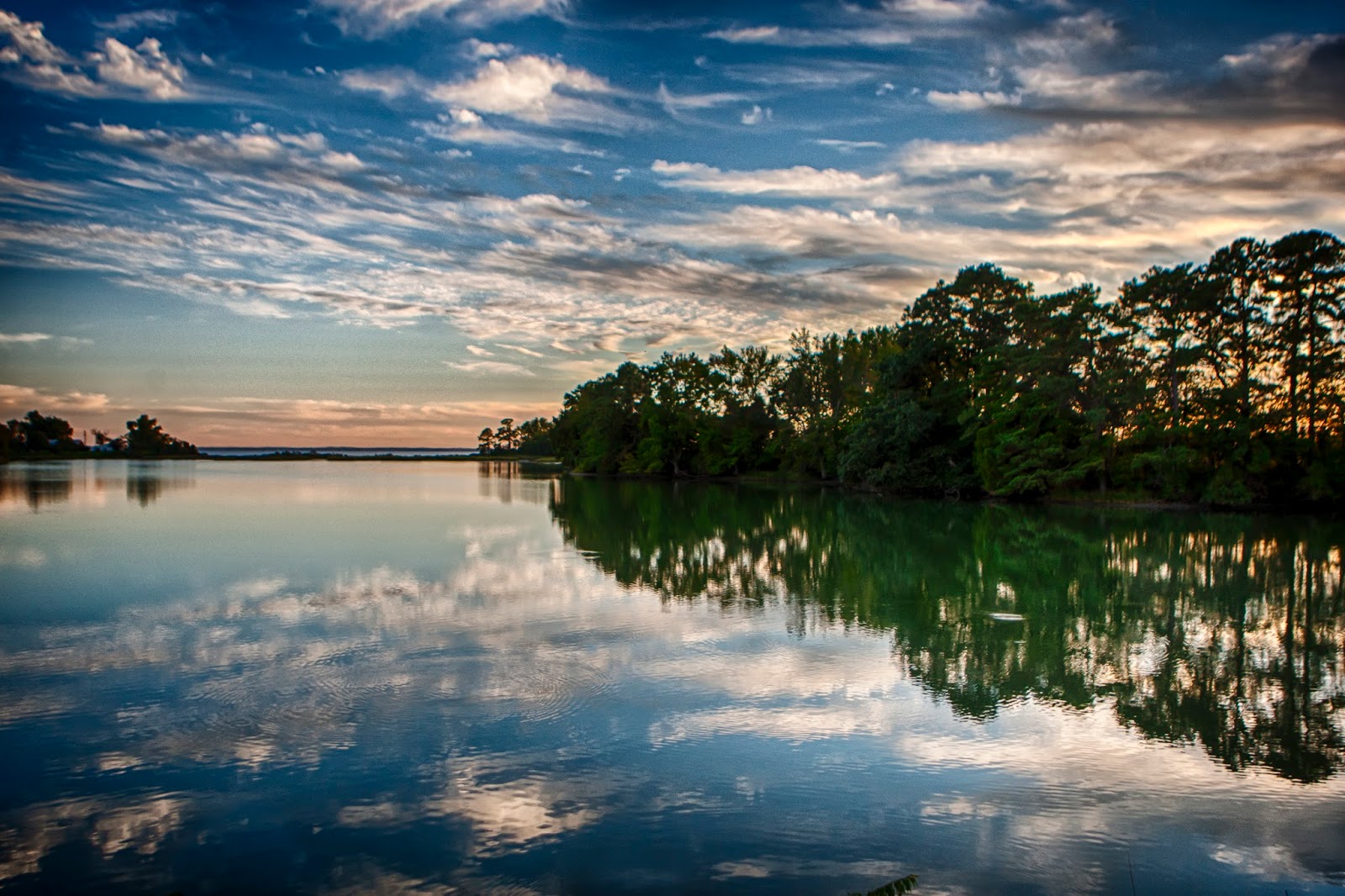
Chesapeake Scenes


Subscribe to:
Posts (Atom)